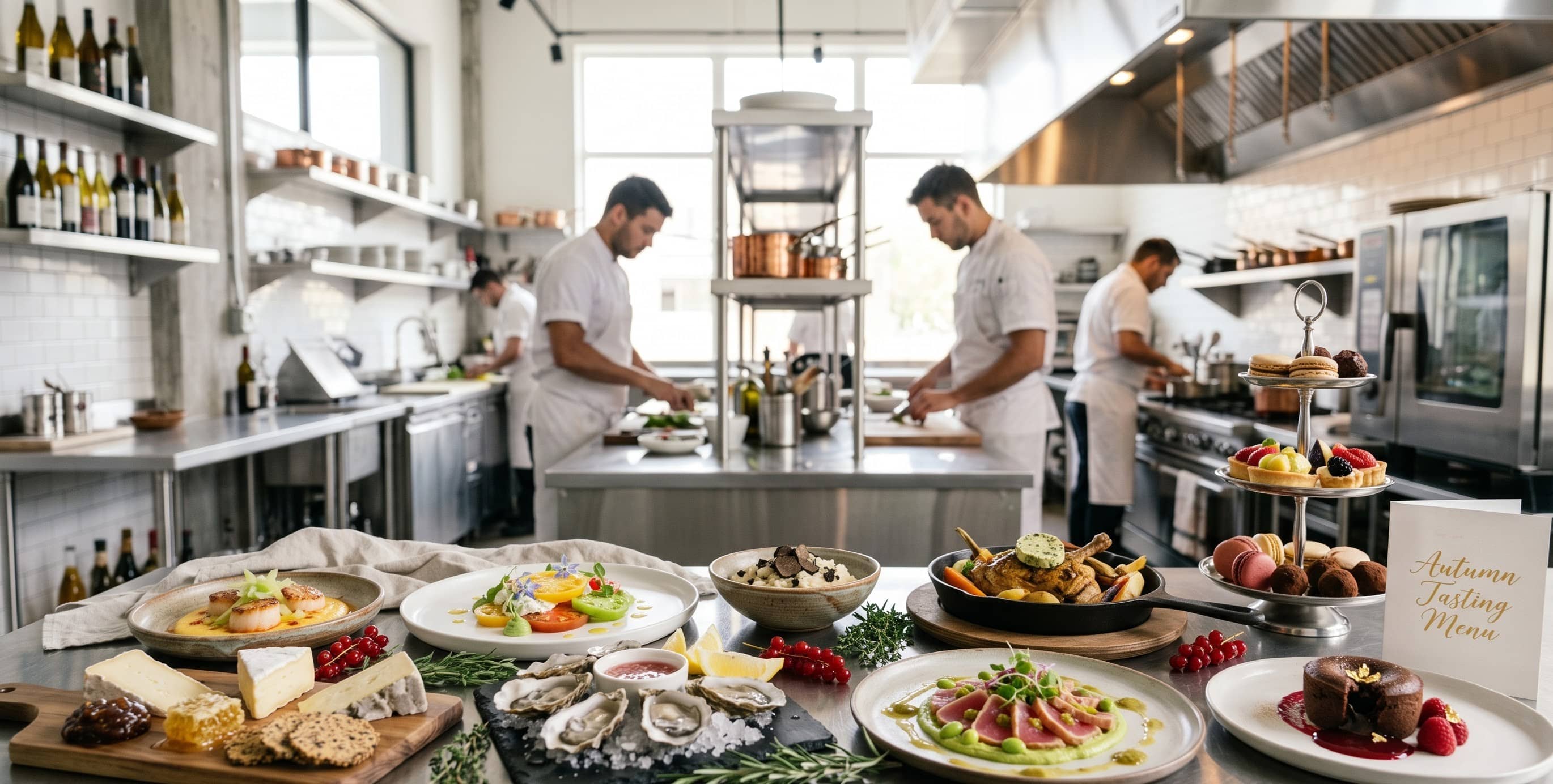
The situation
The visit does the selling and they decide whether to make one from six photographs.
They find you on a phone, on a Saturday, halfway through comparing you with two others. They look at the pictures, try to work out whether you are in their bracket, and decide whether you are worth an hour of a weekend. Most of that happens before they read a word.
Where it fails
In person you are a certainty. On a screen you are a guess.
A couple needs to know whether you seat a hundred and twenty and whether you’re free in June. A client needs to know what a tasting menu costs per head. Someone planning a kitchen needs to know whether you work at eight thousand or eighty. A patient needs to know who would actually treat them. Those answers are rarely on the site, so the visitor guesses. A guess against you costs them nothing, and you never hear about it.
The obvious loss is the enquiry that never arrives. The hidden one is the enquiry that does. When a site won’t say what you cost, who you’re for or what you can take on, everyone enquires, and most were never going to book. That’s half a day a week answering the same three questions by email. On your calendar, it looks like demand rather than waste.
And you know what the pictures miss. You’ve stood in that room at five in the afternoon when the light comes across the floor. You’ve plated that dish four hundred times. You’ve opened a door you spent three weeks getting right. None of it is on the site, so you send the address and meet them there, because in person it takes ninety seconds.
Fifteen seconds on a small screen decides whether anyone ever sees the real thing.
How it works
Every stage ends with something in your hands, and a decision that is yours.
Four stages, in that order. You can stop after any one of them and keep what it produced. That includes the shot list, which is worth having whoever ends up building the site.
- 01
The first conversation
You write, through the contact page or straight to my inbox, and it helps to send whatever photographs you already have, good or bad. I read it myself, and nothing drops into an address nobody owns. If what you need is not what I do, I say so and point you somewhere better.
You keepA reply from me, not from an autoresponder.
- 02
What the pictures have to do
Spending some time on understanding who actually books you: what they’re comparing you against, what they’re afraid of getting wrong, and the question they ask before they ask the price. Then I go through the pictures you already have and work out what’s missing, what’s out of date, and what a visit proves that a photograph currently doesn’t.
You keepA written brief, and a shot list for what is missing.
- 03
Design and build, around the pictures
Strategy, design and build stay in one pair of hands. Photographs are treated as content, not decoration. The ones that answer a question come first, with the detail beside them: how many it seats, what it cost, how long it took. What you charge and who you’re for is stated early and plainly, so people who were never going to book can rule themselves out before they take up an afternoon of yours.
You keepA staging link you can open on a phone, with your own rooms in it.
- 04
Launch, and what you keep
It goes live in your accounts: domain, hosting and the words. There is upkeep, though. Rooms get refurbished, the seasons change what the place looks like, and a gallery showing last year is a gallery arguing against you. Keeping it current is either your people, once I have shown them how, or me on a monthly basis.
You keepEvery account in your name, and nothing in it only I can open.
You are never asked to commit to a stage before you have seen the one before it.